
Enclosed Track Overhead Conveyor
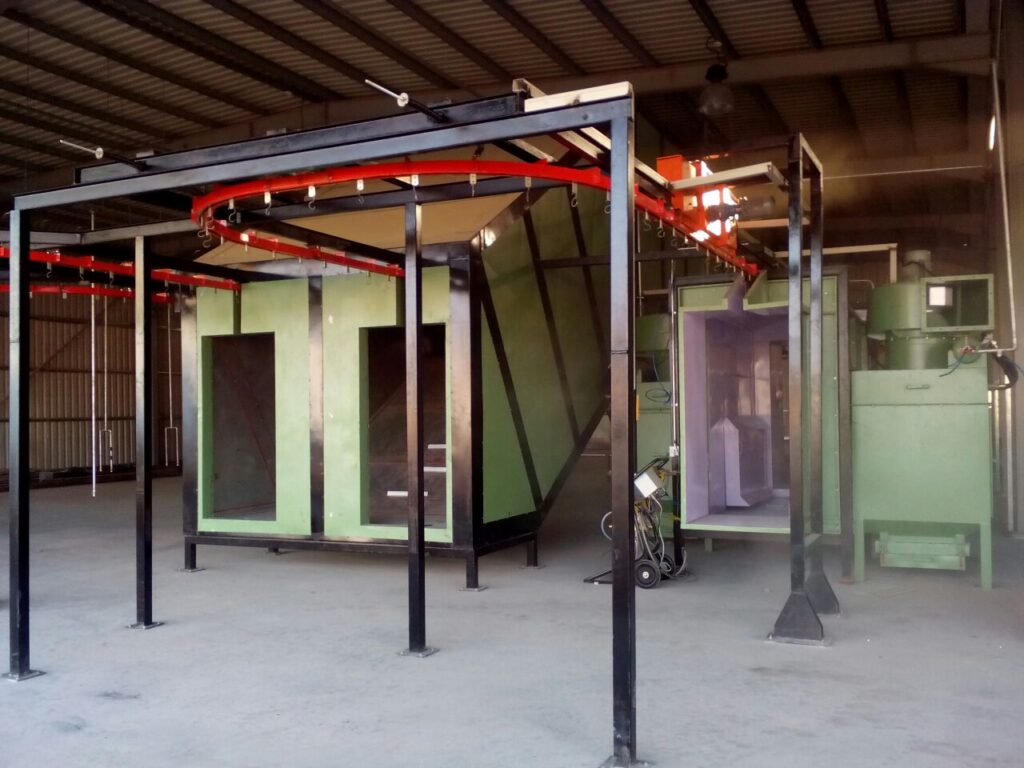
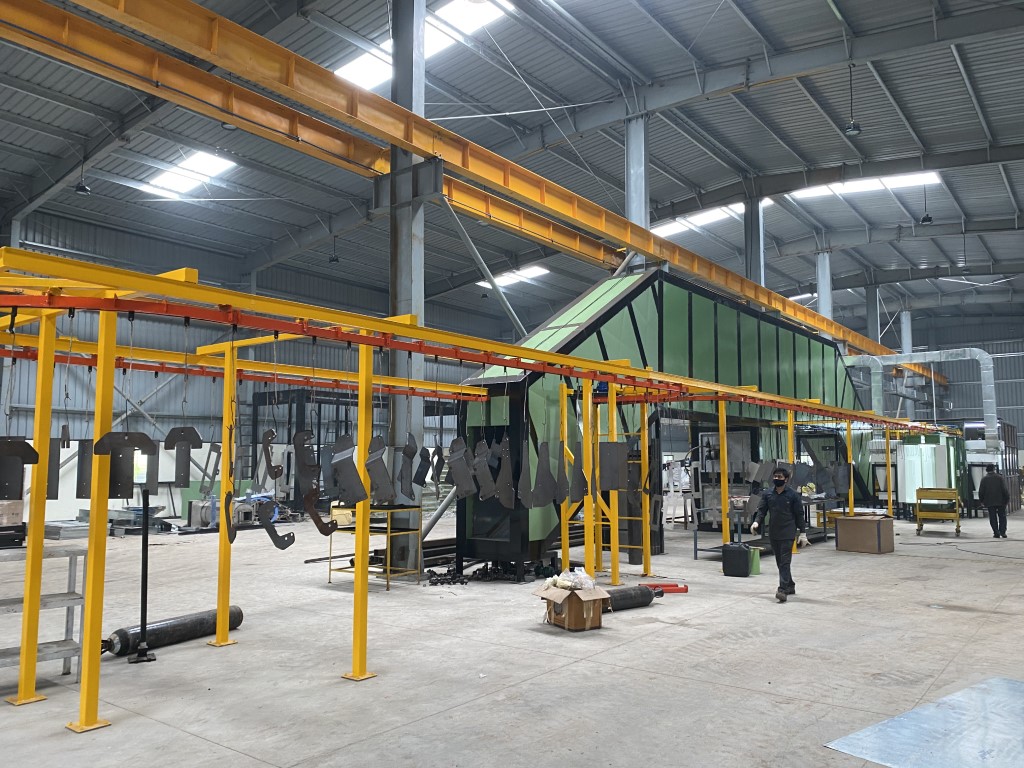
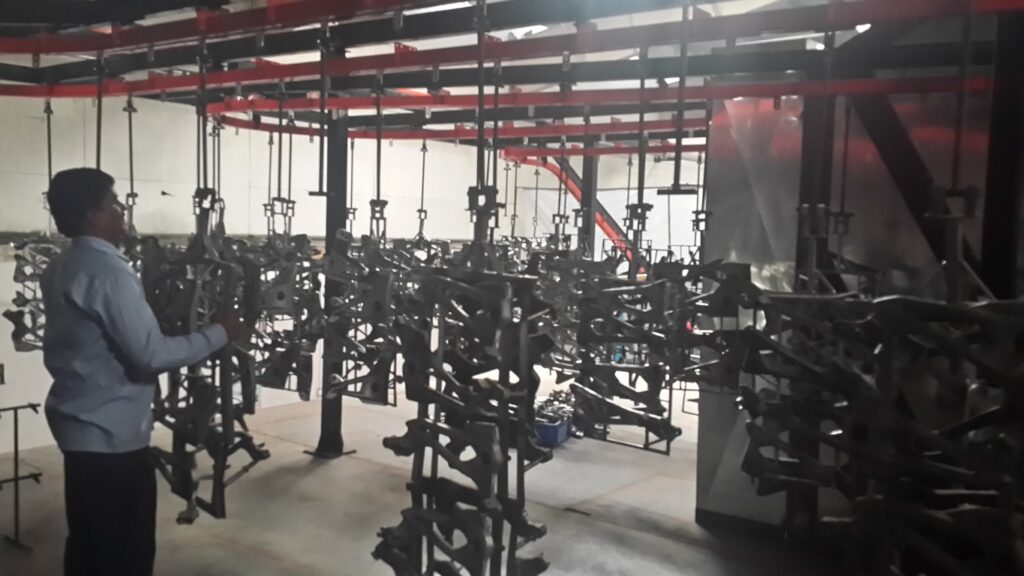
In a powder coating plant, the conveyor system is the literal backbone of the operation. It moves parts through a harsh gauntlet of chemical pre-treatment washes, intense electrostatic powder booths, and high-heat curing ovens.
Among the various conveyor styles available, enclosed track overhead conveyors have become the industry standard for light-to-medium-duty powder coating lines. Here is a comprehensive breakdown of why they are used, how they work, and their distinct advantages.
What is an Enclosed Track Overhead Conveyor?
Unlike traditional I-beam conveyors where the chain and trolleys ride openly on top of a steel beam, an enclosed track conveyor chain runs inside a rolled steel track shaped like an inverted “box” or tubular profile with a continuous slot at the bottom.
As seen above, the moving components—the chain links, universal joints, and guide wheels—are completely housed within the steel shell. Only the pendant (the bracket used to hang the parts) extends downward through the narrow bottom slot.
Why they are vital for powder coating
Powder coating plants present a uniquely hostile environment for material handling equipment. Enclosed tracks are purpose-built to survive and thrive under these exact conditions for several key reasons:
-
Protection Against Contamination (Two-Way Shielding)
During the coating process, oversprayed powder floats everywhere. If powder accumulates on an open chain, it bakes and hardens inside the curing oven, binding up the bearings. The enclosed track shields the moving chain from direct exposure to the airborne powder.
-
Tight Turn Radii and Vertical Flexibility
Powder coating plants require parts to twist and turn tightly to maximize space. Parts need to dip down into pretreatment tanks, rise up into elevated ovens, and snake back and forth in "Z-pattern" loops inside drying enclosures to maximize cure times. Enclosed track chains feature universal joints that allow them to make incredibly tight horizontal turns (often down to an 18-inch radius with sprocket turns) and steep vertical climbs (up to 45-degree)
-
Space and Energy Efficiency
Because the track can handle tight loops and steep inclines, the entire plant can be designed with a smaller footprint. Keeping parts densely packed inside the curing oven also minimizes heat loss, drastically cutting down on industrial utility costs. Jig pitch of 300mm to 500mm are possible with our enclosed track overhead conveyors.